-829x301.png "The Power Cart")


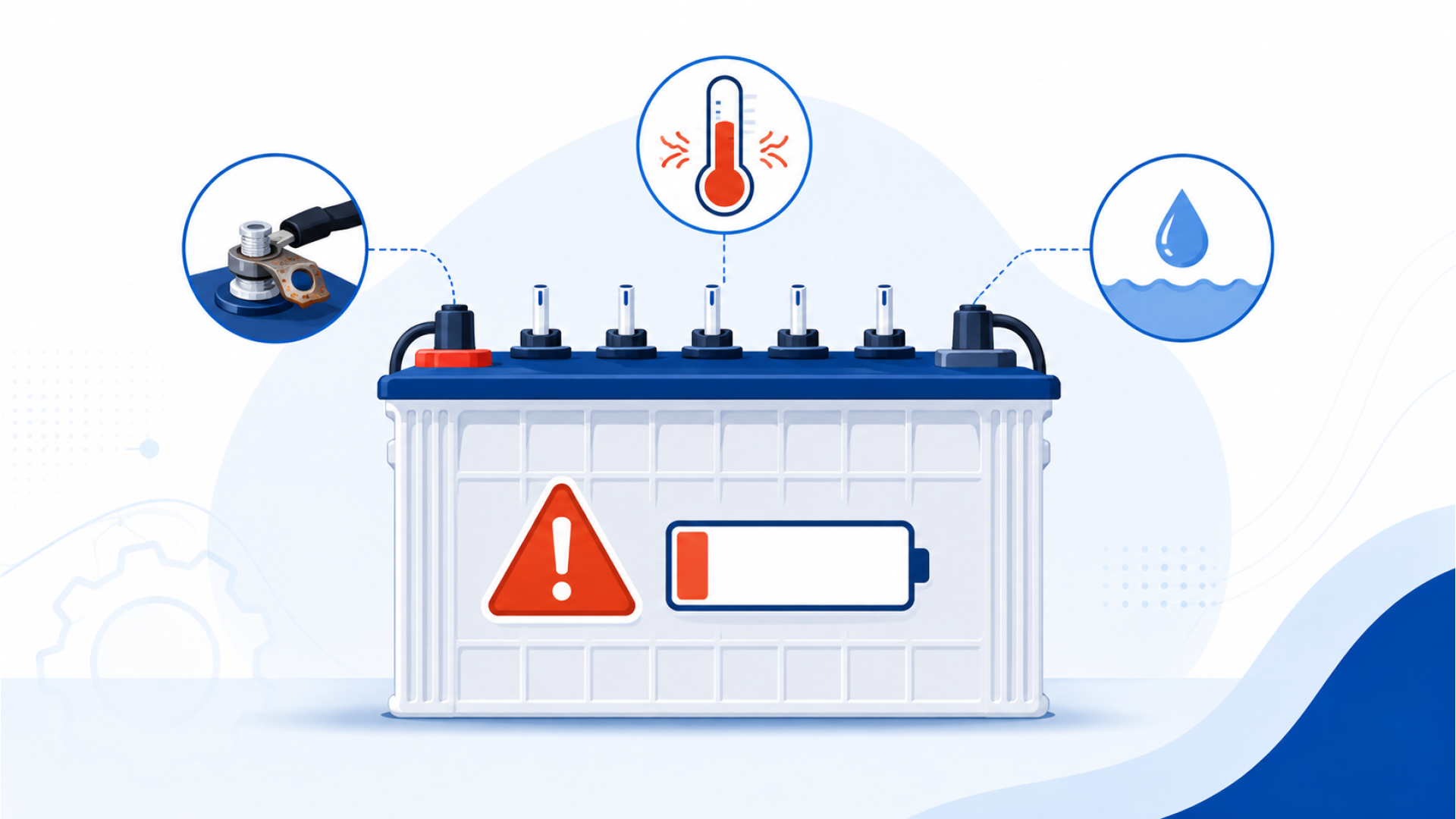
You bought a fresh inverter battery expecting hours of backup, and within a few months it barely lasts through one power cut. This is one of the most common complaints we hear, and in almost every case, the battery isn't actually faulty — something in how it's being used or maintained is draining it faster than it should. Here are the 7 most common causes, and exactly what to do about each one.
1. Overloading the Inverter
Every inverter-battery combination has a rated capacity. Running appliances that add up to more than that rating — especially compressor-based loads like an AC or a second refrigerator — forces the battery to discharge much faster than its normal backup-time rating assumes.
Fix: Check your inverter's rated VA capacity and only run appliances that comfortably fit within it during a power cut. Heavy appliances like ACs and geysers should ideally run on separate stabilized mains power, not through the inverter.
2. An Aging Battery Nearing End of Life
Lead-acid inverter batteries typically last 3 to 5 years under normal use. As a battery ages, its actual usable capacity drops well below its rated capacity, even if it still accepts a charge and shows a "full" indicator.
Fix: If your battery is more than 3 years old and backup time has dropped noticeably even with light loads, capacity loss from age is the most likely cause. A battery health check at the time of your next service visit will confirm this.
3. Low Electrolyte (Water) Level in Tubular Batteries
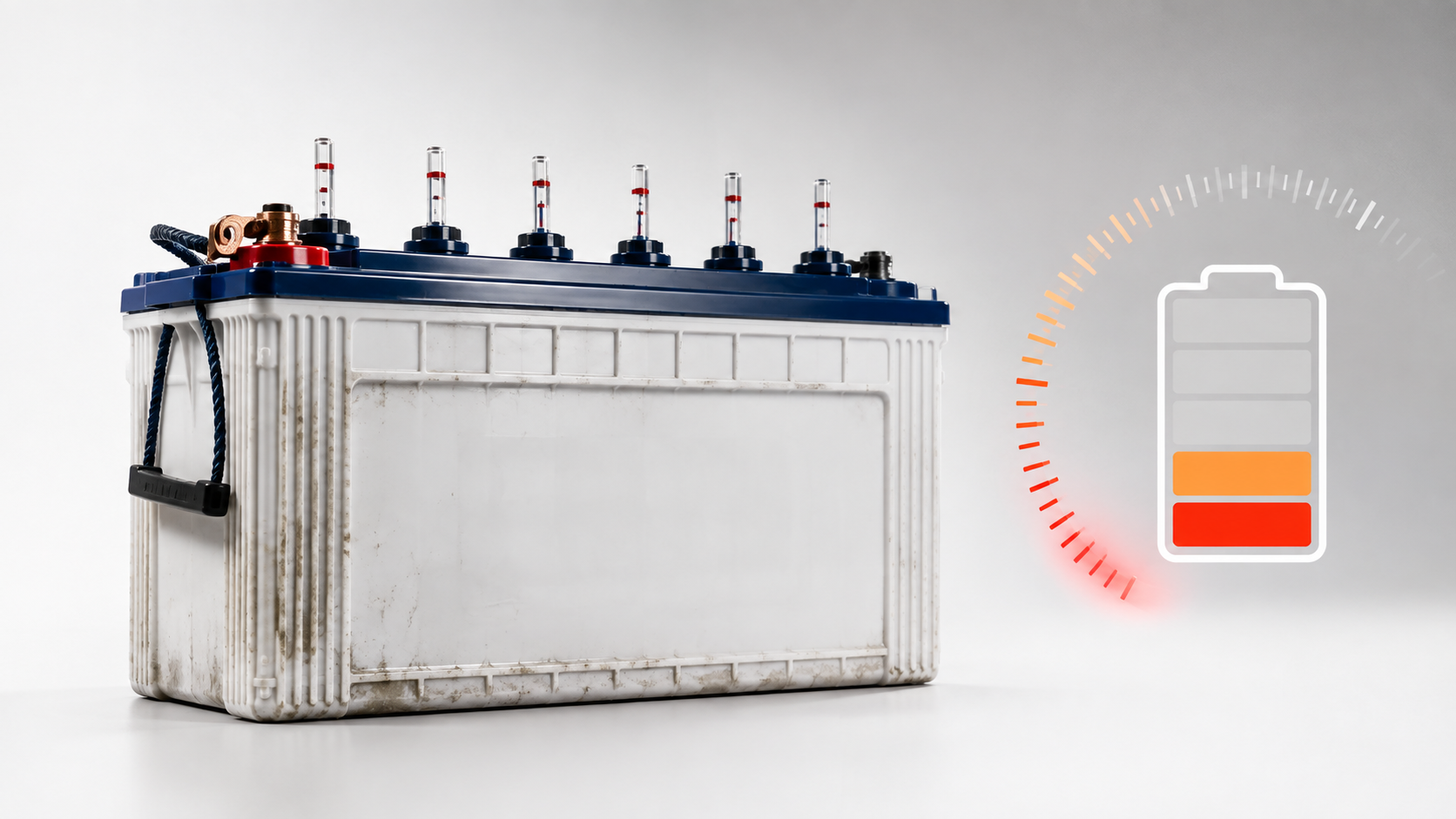
Tubular batteries need their electrolyte topped up with distilled water periodically. When the water level drops too low, the plates get exposed to air, which permanently damages them and sharply reduces both backup time and battery lifespan.
Fix: Check the water level every 2 to 3 months (more often in peak summer) and top up with distilled water only — never tap water or acid — up to the marked level. This is the single most-skipped maintenance step we see in customer batteries brought in for service.
4. Repeated Deep Discharging
Letting a battery drain down close to empty on a regular basis — rather than recharging it well before it's fully depleted — puts far more stress on the plates than shallow, partial discharges. Lead-acid batteries are only rated for a limited number of deep-discharge cycles before capacity starts falling off permanently.
Fix: Where possible, avoid running the battery all the way down during long outages. If your area has frequent, long power cuts, consider a higher-capacity battery sized for your actual outage length rather than repeatedly deep-cycling a smaller one.
5. Incomplete Charging Cycles
If mains power keeps returning before the battery has fully recharged — common in areas with short, frequent outages — the battery never reaches a complete charge. Over weeks and months, this leads to a condition called sulfation, where crystal buildup on the plates permanently reduces how much charge the battery can hold.
Fix: Let the battery charge fully whenever possible, ideally for a few hours of uninterrupted mains supply at least once every few days. Most modern Microtek, Luminous and Exide inverters manage this automatically with smart charging, but it still needs uninterrupted mains time to actually complete the cycle.
6. Loose or Corroded Battery Terminals
A loose connection or corrosion buildup (the white or bluish-green crust you sometimes see on terminals) increases electrical resistance at exactly the point where current needs to flow freely. This wastes energy as heat, slows charging, and can make backup time drop even on an otherwise healthy battery.
Fix: Inspect terminals every few months. Clean any corrosion with a wire brush and a baking-soda-water solution, dry thoroughly, and make sure connections are tightened firmly (but not over-tightened) before reconnecting.
7. Battery-Inverter Capacity Mismatch
Pairing an inverter with a battery that's undersized for your actual load and backup-time needs means the battery is being asked to work harder, and drain faster, than a correctly sized one would. This is a common mistake when a battery is bought separately from the inverter, or as a cheaper replacement without checking compatibility.
Fix: Match your battery's Ah (Amp-hour) rating to your inverter's capacity and your actual daily backup needs, not just the lowest available price. Our Home UPS & Inverter range lists the recommended battery pairing for each model.
Quick Maintenance Checklist
- Check electrolyte/water level every 2-3 months (tubular batteries only)
- Inspect and clean terminals for corrosion every few months
- Avoid running heavy compressor-based appliances through the inverter during outages
- Let the battery reach a full charge regularly, not just a partial top-up
- Avoid repeated deep discharges where possible
- Have the battery load-tested annually once it's past 2-3 years old
When to Repair vs When to Replace
If your battery is under 2 years old and backup time has dropped suddenly, the cause is usually maintenance-related (points 1, 3, 5, or 6 above) and fixable. If it's past 3-4 years and backup time has been declining gradually over months, you're most likely looking at normal end-of-life capacity loss, and replacement is the more cost-effective option. Browse our Inverter Batteries range for replacement options across Exide, Microtek, Luminous and Okaya.
Frequently Asked Questions
How long should a new inverter battery hold backup? This depends entirely on your battery's Ah rating and connected load, but a healthy, correctly sized battery should deliver consistent backup time close to its rated capacity for at least the first 2-3 years.
Does overcharging also damage the battery? Yes. Overcharging causes excessive water loss (in tubular batteries) and heat buildup, which also shortens lifespan. This is why a good inverter's built-in charge controller matters as much as the battery itself.
Can a draining battery be restored, or does it always need replacing? Mild sulfation from incomplete charging can sometimes be partially reversed with a proper reconditioning charge cycle. Physical plate damage from low electrolyte or age-related wear cannot be reversed, and replacement is the only real fix.
Is it normal for backup time to be shorter in summer? Yes, to some extent — higher ambient temperatures increase a battery's internal self-discharge rate slightly. But if the drop is sudden or severe, don't assume it's "just the heat" — check the causes above first.
46 Comment(s)
References:
Neosurf casino promotions australia neosurf sign up bonus australia
References:
Neosurf $5 deposit casino australia https://zhujia.ca/?262280
References:
Top australian online casinos accepting neosurf https://graph.org
References:
Best neosurf casino australia http://halcom.cn/home.php?mod=space&uid=153525
References:
Neosurf casino fees australia https://www.akaguide.com/
References:
Neosurf casino cash out bbs.wj10001.com
References:
Mobile casino neosurf australia neosurf no verification casino australia
References:
Online casino neosurf bonus rotatemail06.bravejournal.net
References:
Neosurf no verification casino australia https://ryu-ga-index.com:443/index.php?mahoneymatthews448779
References:
Neosurf casino loyalty rewards australia git.arteneo.pl
References:
Best online casino australia neosurf https://school-of-safety-russia.ru/user/flavorfelony62/
References:
Neosurf casino poker machines australia intensedebate.com
References:
Best bank transfer casinos australia minimum deposit wire transfer casino australia
References:
Neosurf casino anonymous australia youtube.com
References:
Wire transfer casino gambling Australia https://pad.stuve.de/KDaWw6obTYyLQZxS-4uvOw
References:
Neosurf 10 digit code casino australia androidonly.com
References:
Wire transfer casino gambling Australia top bank transfer casino Australia
References:
Neosurf casino australia aud https://gitlab.oc3.ru/
References:
Wire transfer real money pokies australia wire transfer casino free spins Australia
References:
New neosurf online casinos aus 10 aud deposit casino neosurf
References:
Wire transfer casino banking options Australia http://bbs.51pinzhi.cn/home.php?mod=space&uid=8438486
References:
Australian casino payment methods wire transfer http://www.sg588.tw/home.php?mod=space&uid=1299440
References:
Neosurf online gambling real money australia gitlab.rails365.net
References:
Neosurf roulette casino australia neosurf secure casino deposit australia
References:
Fast bank transfer casino australia http://l1ae1d.творение.москва/user/elbowstool26/
References:
Wire transfer pokies sites australia https://codimd.syssec.org/
References:
Top payid pokies australia 5 dollar deposit pokies payid
References:
Osko pokies best payout speed Osko online pokies
References:
Casino wire transfer BSB australia https://xbymw.com
References:
Best pay id pokies https://stanley-kenney-3.blogbright.net
References:
Safe Osko pokies https://rdcvw.com/
References:
No deposit payid pokies australia best payid pokies australia
References:
Mobile pokie sites accepting bpay http://bbs.pcgpcg.net/
References:
Osko online casino Australia md.sigma2.no
References:
Payid pokies casinos qilurexian.net
References:
BPay pokies AU https://architecturewiki.site/wiki/Lucky_Time_Slots_Pokies_Games_Apps_on_Google_Play
References:
Osko pokies app Osko casino deposit
References:
BPay pokies withdrawal https://dok.kompot.si/xvKmJCNoSQ6MFukGlFmz_w
References:
Osko casino fast payout payid casino no deposit bonus
References:
Online gambling MiFinity Australia https://linkagogo.trade/story.php?title=mifinity-online-casinos-bonuses-for-players-from-australia
References:
Regulated bpay pokies app.wedonthavetime.org
References:
Top MiFinity casinos Australia https://xbymw.com
References:
MiFinity casino payout Australia schoolido.lu
References:
Same day payout pokies bpay bpay pokies withdrawal
References:
Payid pokies ancientroman.space
References:
Online slots BPay deposit https://www.democracy-edu.or.kr
Leave a Comment